

Your Wellness, Our Mission
Understanding Memory Loss (Dementia): Types & Causes of Memory Loss
Memory loss refers to the inability to remember information that you previously learned or experienced. It may show up as forgetting recent conversations, misplacing items, or struggling to recall long-term memories.
How Memory Works in the Brain
Your brain processes memory in three main steps: encoding, storage, and retrieval. Think of it like saving a file on your computer. If any step fails, the memory doesn’t load when you need it. Memory issues often occur when stress, illness, or neurological changes disrupt these processes.
Memory Lapse vs Memory Loss
A memory lapse is usually temporary—like forgetting where you parked your car. Memory loss problems, on the other hand, are more persistent and interfere with daily life. Understanding this difference helps reduce unnecessary panic while also recognizing when medical attention is needed.
Types of Memory Loss
Not all memory loss is the same. Different types affect different parts of your memory system.
– Short Term Memory Loss
Short term memory loss affects your ability to remember recent information, such as what you ate for breakfast or a conversation from a few minutes ago.
Short-Term Memory Loss Symptoms
Common short-term memory loss symptoms include repeating questions, forgetting appointments, difficulty following conversations, and losing track of tasks mid-way. These symptoms are often the first signs people notice when memory issues begin.
– Long Term Memory Loss
Long term memory loss impacts memories stored over months or years. This can include personal experiences, familiar faces, or important life events. It’s more commonly associated with neurological conditions and requires medical evaluation.
– Temporary vs Permanent Memory Loss
Temporary memory loss may result from stress, sleep deprivation, or medications and often improves with treatment. Permanent memory loss is usually linked to brain injury or degenerative diseases.
Common Causes of Memory Loss
Understanding memory loss causes helps in choosing the right treatment approach.
– Medical Causes of Memory Loss
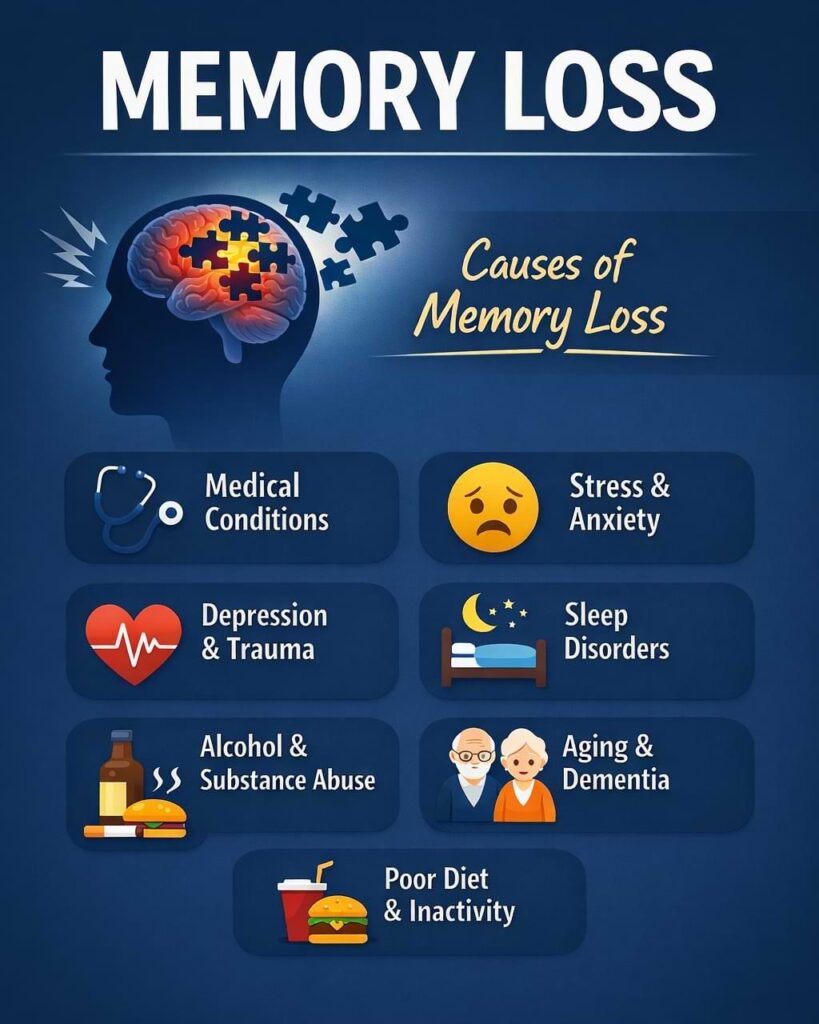
Medical conditions such as vitamin B12 deficiency, thyroid disorders, infections, brain tumors, stroke, and head injuries can all cause memory loss problems. Certain medications may also contribute to memory issues as a side effect.
– Psychological and Emotional Causes
Depression, anxiety, trauma, and chronic stress are major memory lapses causes. When the brain is emotionally overloaded, memory retrieval becomes difficult.
– Lifestyle-Related Memory Lapses Causes
Poor diet, lack of physical activity, excessive alcohol use, smoking, and inadequate sleep all negatively affect brain health and contribute to memory loss problems.
– Age-Related Memory Loss Problems
As we age, some memory decline is normal. However, severe or rapidly worsening memory loss is not a normal part of aging and should be evaluated.
What Causes Memory Loss in Younger Adults?
Memory loss isn’t limited to older people.
– Stress, Anxiety, and Burnout
High stress acts like mental noise, making it harder for the brain to focus and store memories. Prolonged burnout is a common cause of short term memory loss in younger adults.
– Poor Sleep and Digital Overload
Sleep is when your brain organizes memories. Poor sleep and excessive screen time disrupt this process, leading to memory issues and frequent memory lapses.
Lifestyle Changes to Improve Memory
– Nutrition for Brain Health
A balanced diet rich in omega-3 fatty acids, antioxidants, and vitamins supports brain function and reduces memory loss risk.
– Exercise and Mental Stimulation
Physical activity increases blood flow to the brain, while puzzles, reading, and learning new skills keep the mind sharp.
– Sleep, Stress Management, and Mindfulness
Quality sleep and stress reduction techniques like meditation play a vital role in preventing short term memory loss.
Take the first step toward better brain health today
If you or a loved one is experiencing memory lapses, short-term memory loss, or ongoing memory loss problems, don’t ignore the early signs. Timely medical guidance can make a real difference. Our experienced doctors in Gurdaspur offer comprehensive evaluation, accurate diagnosis, and personalized treatment plans for all types of memory issues—from stress-related memory lapses to long-term memory loss.
📞 Call now to consult our doctor in Gurdaspur for expert memory loss treatment and long-term cognitive care.
FAQs About Memoery
What causes memory loss at a young age?
Stress, lack of sleep, depression, nutritional deficiencies, and digital overload are common causes of memory loss in younger adults.
Are short term memory loss symptoms reversible?
Yes, in many cases short term memory loss symptoms improve once the underlying cause is treated.
Is memory lapse a sign of dementia?
Occasional memory lapse is normal and does not automatically indicate dementia.
How is memory loss diagnosed?
Diagnosis involves medical history, cognitive tests, imaging studies, and blood tests to identify memory loss causes.
Can lifestyle changes reduce memory loss problems?
Absolutely. Healthy diet, exercise, good sleep, and stress management significantly improve memory health.
Recent Posts

Arthroscopy vs Open Knee Surgery: Benefits, Risks & Recovery
September 3, 2026 | by admin
Read More →
